

A promoter opens your press kit with one question in mind: will this person fill my room and play the right music for it? Your stats row is the fastest answer you can give. It sits near the top of your kit, it is short, and it gets read before your bio does. That makes it worth a few minutes of thought.
What the stats row is
On MY EPK the stats row holds up to four numbers, each with a short label under it. You choose them. If you leave it alone, your kit fills it for you with your follower counts and how many releases you have posted. The editor also suggests ideas worked out from your own kit, like shows played, releases, followers and years active, so you can pick instead of typing from scratch.
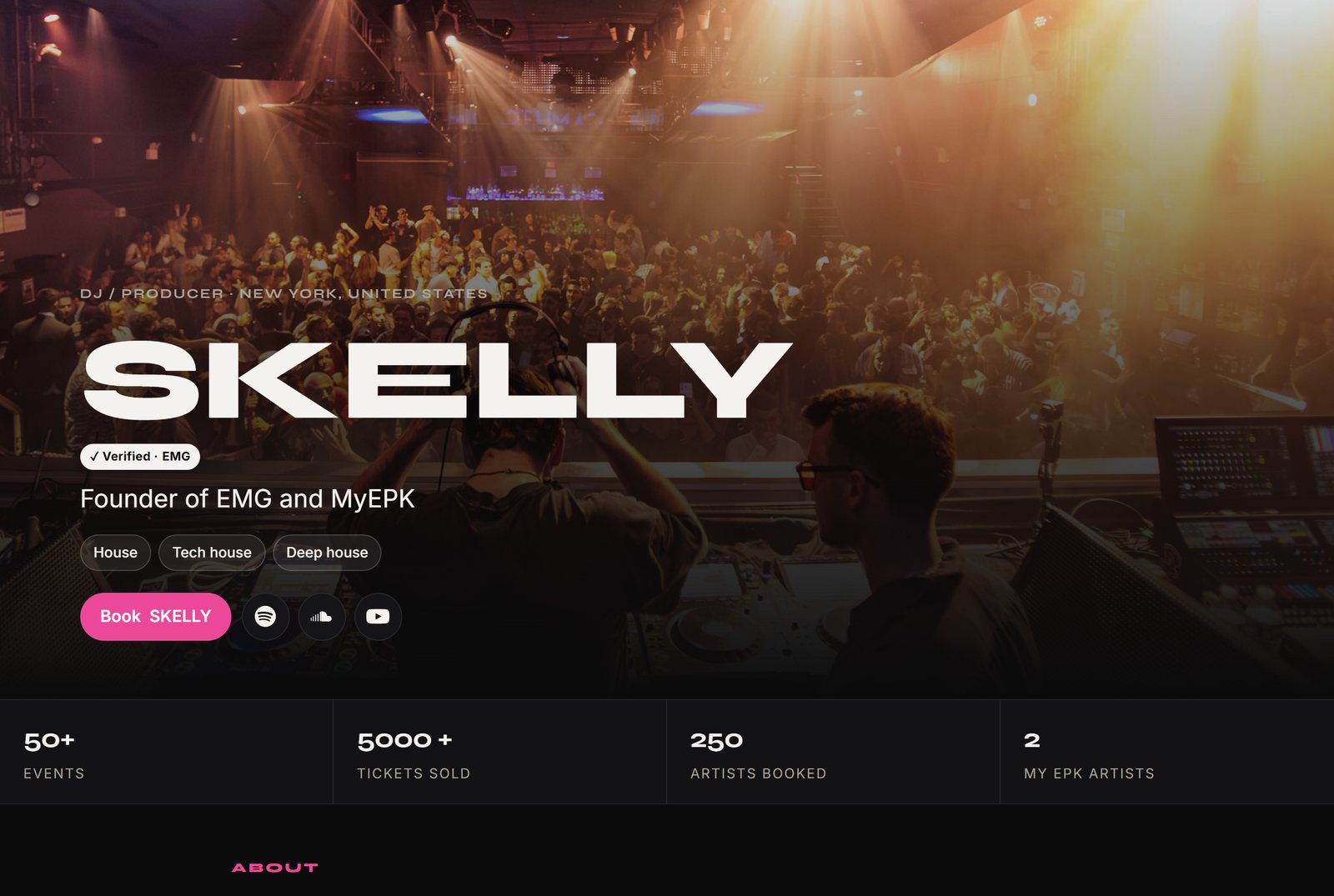
On the page the numbers count up as the row comes into view. When someone saves your kit as a PDF, they settle on their final value, so a printed kit never shows a number halfway through counting.
Four slots is not many. That is the point. Every slot you fill is a choice about what a booker should believe about you.

Numbers that help a booking
The best numbers answer the promoter's real question. A few that usually do:
Shows played. This tells a booker you have done this before, in front of people, and turned up on time. It is the closest thing to a reference a number can give.
Years active. Staying with it says something on its own. It also helps a promoter place you: someone newer who works hard, or someone who has been in the scene for a while.
Releases. If you produce, a release count shows there is music behind the name. Pair it with the releases on your kit so the number leads straight to something they can play.
Residencies or regular nights. A room that keeps having you back is a strong signal. If you have one, a plain label like "monthly residency" can do more than any follower count.
Followers, where they are real and local. A following matters most when it can turn into people at the door. If your audience is close to where you play, it belongs here.
Numbers that do not help
Some numbers look good and say very little to someone booking a night.
Anything you cannot stand behind. If a promoter asks where a number came from and you do not have an answer, leave it off. One number that falls apart makes the other three look weaker.
Totals with no context. A huge lifetime play count on one old track can suggest your best moment is behind you. A smaller, recent number often reads better.
Four versions of the same thing. Followers on four platforms is one idea spread across your whole row. Pick the one that matters most and use the other slots for something different.
Numbers that do not match the gig. If you want bookings in clubs, a stat about something else entirely takes a slot away from what a club promoter cares about.
How to choose your four
Start with the promoter you most want to hear from. Ask what they would need to know to say yes, then pick the numbers that answer it. A good row usually mixes experience (shows or years), music (releases), and reach (one audience number).
Write labels a stranger understands at a glance. Short words, no inside jokes, nothing that needs explaining.
Then come back to it. Your numbers change every month you keep playing, and a row that was right in the spring can undersell you by the autumn. Updating it takes a minute in the kit editor.
Keep it honest, keep it short, and let the rest of the kit tell the story.
Set up your stats row on your press kit at my-epk.com.