
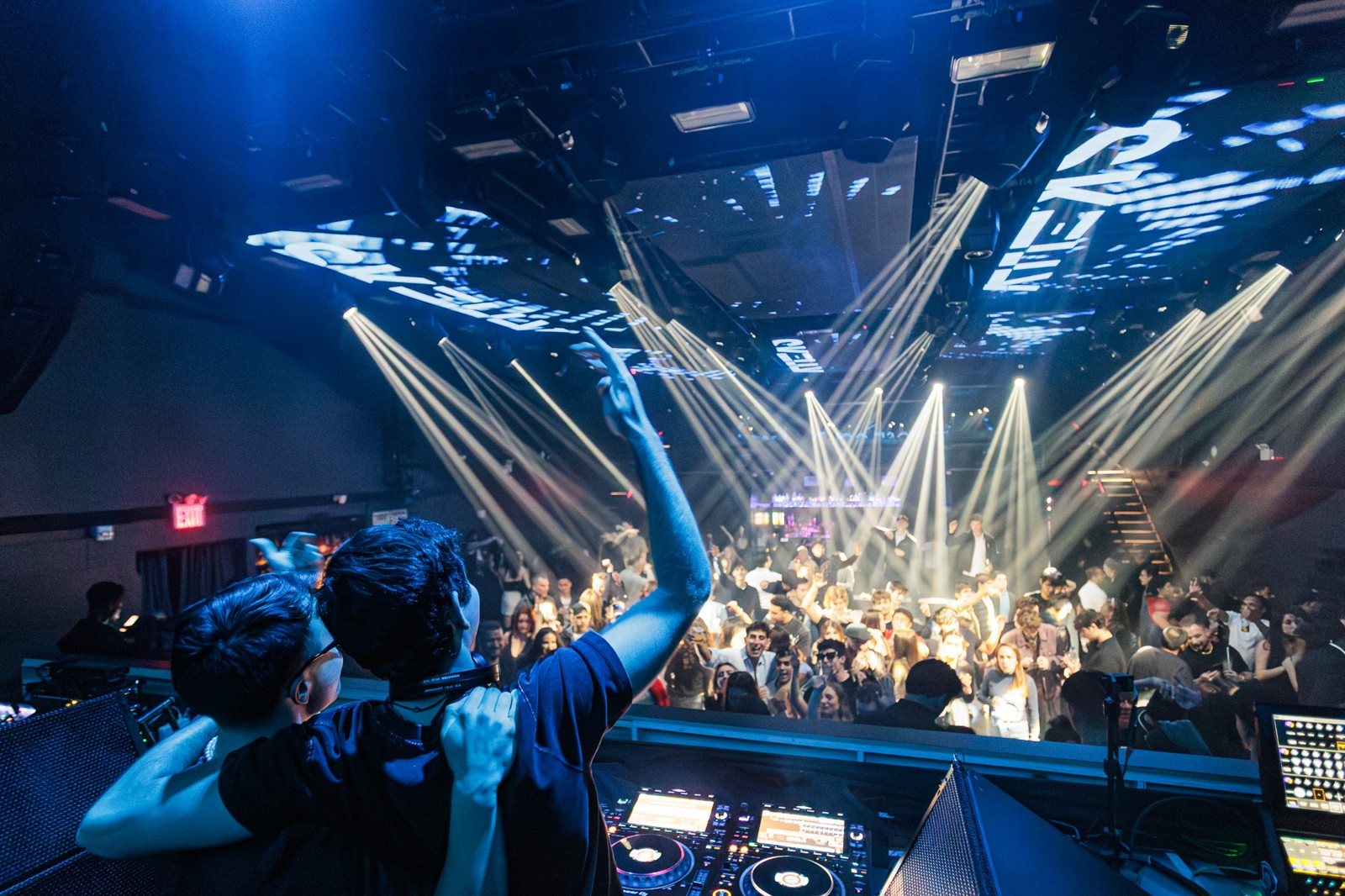
A back to back set can be the best hour of a night or the longest one. Two DJs, one booth, one crowd. When it works, the room feels like a conversation happening in real time. When it does not, it sounds like two people taking turns with the aux cord. The difference is almost never talent. It is planning.
Talk before the night, not in the booth
The booth is loud and the crowd is watching. That is the wrong place to agree on anything. Have one short call or a few texts in the days before.
Settle the basics. How long is the set, and who opens it? Are you swapping every track, every two tracks, or in longer blocks? Every track keeps you both on your toes but leaves no room to build anything. Blocks of three or four let each of you shape a small run while the other listens.
Talk about where the night should go. Agree on a rough shape: where you start, where you want to be at the halfway point, and how you want to hand over to whoever plays next. You do not need a setlist. You need a shared direction.

Share the same gear setup
Nothing kills momentum like a partner fumbling with a USB they formatted differently, or a laptop that needs its own cables. Check what the booth has and make sure you both play from the same kind of source. If one of you needs something special, say so early and test it before doors.
Agree on who controls the mixer settings, too. If one person keeps pushing the gain and the other keeps pulling it back, the sound engineer will notice, and so will the dance floor.
Handovers are the whole job
In a solo set, a transition is between two tracks. In a back to back, every transition is also between two people. That makes each one matter more.
Leave your partner something to work with. Do not end your turn on a breakdown with twenty seconds left, or on a track with a strange intro that is hard to mix out of. Give them a clean groove and enough time to find their next record.
Listen to what they play and answer it. If they bring in a vocal track, maybe you follow with something stripped back. If they lift the energy, do not drag it straight back down to play the record you had queued. The best back to backs sound like one DJ with two sets of hands.

Keys and energy
You will not always know what your partner has lined up, so keep your options open. Have a few tracks ready in neighbouring keys and a couple at different energy levels. If they move somewhere you did not expect, you can follow instead of forcing a clash.
Watch the energy together. It is easy for two DJs to push each other higher and higher until the room has nowhere left to go. Someone has to be willing to pull it back for a moment so the next lift lands.
Be a good booth partner
Keep the booth tidy. Put headphones back where your partner can reach them. Step aside when it is their turn. A nod or a thumbs up when they land a good mix goes a long way, and the crowd sees it.
After the set, talk about what worked. Two DJs who play well together are an easy booking, and promoters remember pairs that sound good.
When a promoter wants to book the pair of you, make it easy for them to find you both. Build your press kit at my-epk.com.